Units, Groups, Classes, and Branches
A NewVistas community is made up of participants: Enterprise Owners and their dependents. An Enterprise Owner owns a Business Enterprise outright through his or her own Enterprise LLC, runs it for profit in open competition with help from the community’s bureaus, and holds the community-titled assets it uses in custody, by lease at market rent. No personal capital is required to become one. Dependents are minors, the elderly, the disabled, and others who are, for the moment, unable to be economically productive enough to sustain themselves, and who are under the care of an Enterprise Owner.
Enterprise Owners and their dependents are organized into Units. Each person in a Unit lives on the same floor of an apartment building. Each floor has the number of apartments needed to fit the needs of each Enterprise Owner and their dependents. A Unit is ten households, about 24 people. Each building also has 22 guest suites for visitors, four on the second floor and six on each floor above it. Guests are not members of the Unit.
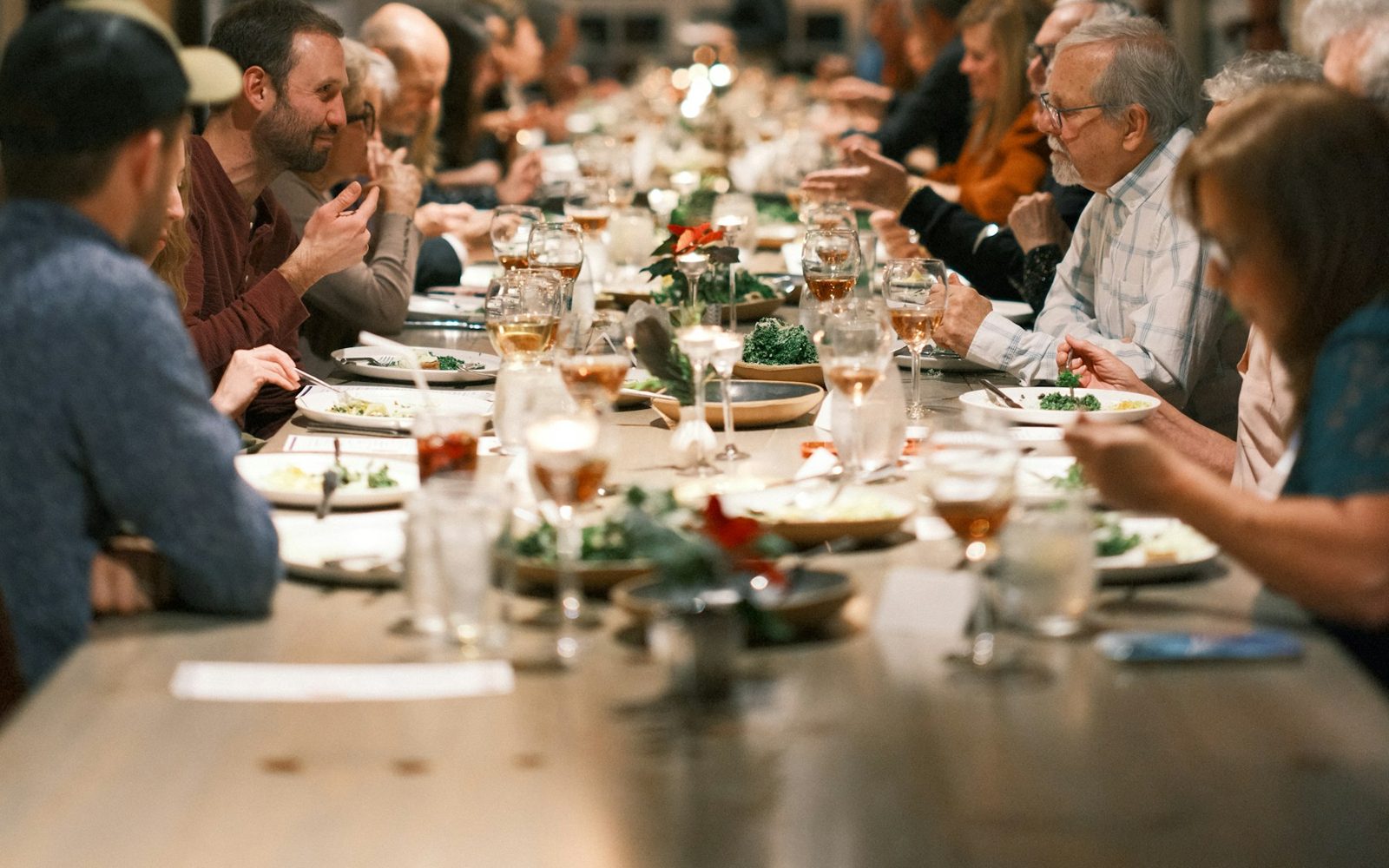
Units and floor captains
Each Unit is served by a floor captain. Having four residential floors, and therefore four Units, an apartment building is also a Branch. There are four floor captains, one seated from each of the four Segments of the community, in a fixed order: partnered men on the first residential floor (A), partnered women on the second (B), single men on the third (C), and single women on the fourth (D). That order decides only which seat each floor captain holds. It does not mean that a floor is made up of one Segment; residents of every Segment live on every floor.
Floor captains, as with all other community public servants (presidents), serve four-year terms. A president begins service when the office opens on the birthday of the president being replaced, and the office opens again on his or her own birthday at the end of the four-year term.
The pegging of entry into and exit from service on birthdays enables randomness in replacement, and gives presidents enough time to acclimatize to their roles. Birthdays are controlled by no one, so no one can gather many offices into one turnover, and in a presidency of four only one seat turns at a time. Each president therefore finds the three other members of the presidency already serving, often for a considerable time.
Floor captains live where they serve, since each must live on the floor of the Unit he or she serves, and keeps an office there. Like every other office, the office of floor captain has its own published requirements, and is filled from qualified applicants by narrowing and random draw. Because a floor captain must move onto the floor, selection is completed well before the office opens, so that, when needed, moving and relocation can happen seamlessly. Like every president, a floor captain serves unpaid and carries every cost of serving personally.
Gender and companionship
Each participant’s Segment is declared by that participant, and it is never assigned or investigated. On application, each participant declares whether he or she is partnered or single, and female or male. The declaration is then confirmed or updated each quarter in the Life Plan.
Same-sex partnering is recognized. A person who is transitioning, or who otherwise stands under a particular gender, declares accordingly.
The declaration places a participant in a Segment for representation and seats, and it does nothing else. It confers no property or joint Business Enterprise, and it binds no lease. It never alters rent, credit, underwriting, insurance pricing, the level of any service, admission, discipline, or any right of title or custody. Segment and partnership information is kept apart from every leasing and underwriting decision.
Every participant belongs to a Segment from entry. Below Life Plan age, a child’s Segment follows from single status and the gender declared by the responsible Enterprise Owner. The young person confirms or corrects it on reaching that age.
Each Segment has its own court in the public buildings, and the four courts are equal in size, seating, and standing. Partnered men sit in the lower court of HOUSE 5, and partnered women in its higher court. Single men sit in the lower court of HOUSE 17, and single women in its higher court. A higher court is a position, not a rank.
Companionship
In virtually every jurisdiction in the world, marriage is a publicly recognized contract between two or more people, with each accepting a range of responsibilities and expecting some consideration in the form of the responsibilities that the other party agrees to.
However, in many cases, two people living together may not be legally married, with various degrees of formality between them. In some cultures, the costs associated with marriage are extremely high. Lavish, well-planned events that are steeped in culture and tradition are a bare minimum in some cultures. In India, for instance, a modest wedding takes place over two days, includes dozens of ceremonies and rituals, and costs at least 6,000 dollars. For this reason, many Indians prefer not to wed until they are financially stable, and live with their partners without being formally married.
This scenario is replicated in many other places around the world. Besides the cost, other issues such as the non-acceptance of a bride or groom by the other family because of financial or social status, ethnicity, and other differences are common.
For these reasons the community speaks of being partnered rather than married. Whether a participant is partnered or single is simply declared by that participant, and the community applies no test to it.
If a president starts serving the community in one of the four Segments and, in the course of service, his or her status changes, the president continues serving the term. For instance, a man may start serving while single, and midway through his term, marry. This does not affect his term of service.
Units and groups
Units are meant to be diverse, with the Enterprise Owners coming from all the Segments of the population where a community is located. Floor captains lead the recruiting for their own floors. The presidency responsible signs each lease and the property manager administers it, so a floor captain is never a party to a lease.
While serving a Unit, the floor captain is each resident’s first point of contact with the community. Floor captains help Enterprise Owners and their dependents interface with the community, working with the bureaus’ automated systems, dealing with social issues, and taking part in welcoming new residents. Together with the village presidents, they also help identify Business Enterprises that are struggling, so that they can be restored rather than left to fail.
The Enterprise Owners in a Branch are also organized into four groups. Group 1, “Partnered,” is made up of partnered men and partnered women. Group 2, “Singles,” is made up of single men and single women. Group 3, “Men,” is made up of single men and partnered men. Group 4, “Women,” is made up of partnered women and single women.
Each group is served by the two floor captains seated from the two Segments that combine to form it. The men’s group is therefore served by the floor captains seated for partnered men and single men, while the singles’ group is served by the floor captains seated for single men and single women. Dependents also belong to the groups that reflect their status and gender, so that a boy of five is a single male, while an elderly couple of ninety who have given their power of attorney to their son are regarded as a partnered man and a partnered woman. Each of the four groups has an average of about fifty members.
Within each group there are different subsets, known as classes, based primarily on age. There is a class for the Nursery (0–2), Toddlers (3–5), Young children (6–9), Pre-teens (10–12), Teens (13–18), Young adults (19–31), Adults (32–72), and Empty nesters (73 and over).
Table 1: Classes
A Branch, made up of four Units, has 96 permanent residents. The four floor captains, one seated from each Segment, together form the Branch Presidency. The Branch Presidency is an operational body that serves the Branch’s residents; it never governs, and it meets on Mondays at 9:00 with the community’s other presidencies of four. When serving in the Branch Presidency, a floor captain’s main focus is the proper representation of his or her Unit in Branch activities.
Ten Branches make a village, of about 960 participants. A village is served by three village presidencies of four, from the three bureaus of Department I, which together form its village council of twelve. Four villages form a district. Similarly, a district is served by three district presidencies of four, from the three bureaus of Department II, which together form its district council of twelve.
With four villages of 960 members each, every district has 3,840 members. There are 24 districts in a NewVistas community, so a full community has 92,160 permanent residents.
Meetings

Meetings are a critical part of enhancing individuals’ participation in the community’s activities. Units, groups, classes, and Branches are important social support structures and meet regularly. Villages and districts also have meetings, while the community and its public servants meet every quarter. Every one of these meetings is voluntary, and those who take part pay for it, as described at the end of this paper.
On Sunday, every Branch in the community holds a full Branch meeting. With the community focused on enhancing participation, it is hoped that the Sunday Branch meetings will attract up to 70% of a Branch’s members, with the following hour’s classes attracting around 50 to 60%.
Branch meetings are facilitated by one member of the Branch Presidency in turn, with another keeping the minutes. On the first Sunday, floor captain A (partnered men) presides and floor captain B (partnered women) takes the minutes. On the second Sunday, floor captain B presides, while floor captain C (single men) takes the minutes. All presidencies in the community rotate presiding and clerking each week on the same pattern. The thirteenth week of each quarter carries no Branch meetings, since it is given to the district and community events and the quarterly conference.
Table 2: Presiding and clerking at Branch meetings
Branch meetings start on the hour and run for 45 minutes. They focus on the important things facing the Branch as a whole, with the presiding floor captain forwarding any issues that arise to the right avenues for further action. After the meeting, participants move to their classes.
Branch and group meetings are held in the district building, so that a Branch that belongs to District 1 holds its meetings in District Building 1. A district building can hold ten Branch meetings at the same time, which is one village’s Branches, and can hold the group meetings, with their classes, at the same time. This means that the villages take turns to hold their Branch meetings.
Meetings begin at 9:00 on Sundays. When the first village’s Branches have concluded their meetings, they move to classrooms nearby for their group meetings, and the assembly rooms they had occupied are taken up by the second village. When the first village’s groups have concluded their classes, they vacate the building, and the second village’s Branches take those rooms for their own group meetings.
Branch meeting assembly rooms hold 72 people, or 70% of a Branch. This is enough for a well-attended meeting, considering normal attendance patterns at similar meetings, such as church or social group meetings. Classrooms can accommodate around 60% of a class’s membership.
The time slots are not reserved for particular villages in perpetuity. If one village has its meeting at 9:00 this year, it rotates and another village takes its place the next year, so that over a four-year cycle every village has an opportunity to start its meetings at each of the four hours.
The order in which villages follow each other for Sunday’s meetings is calculated from the year 1836. In that year the Kirtland Temple was completed and dedicated. The Plat of the City of Zion and the design for the House of the Lord are clear on the dimensions of the house, and that this building was to be the first of 24, each with its own functions. The timing of meetings therefore assumes that they have been taking place, as originally envisaged, in the district buildings since then.
The rotation of villages is calculated with the following formula, for village v in a given year:
Start hour = 9 + (year − 1836 + v − 1) − 4 × floor((year − 1836 + v − 1) ÷ 4)
- 9 is the earliest time a Branch meeting takes place (9:00).
- 4 is the length of the cycle, in years, before it restarts.
- The floor function returns the figure to the nearest lower whole number, so that, for example, 2.65 becomes 2.
Illustration: to calculate the start time for village 1 in 2025, the year less 1836 is 189, and 189 less four times floor(189 ÷ 4), which is 188, leaves 1. Village 1, which started the 1836 meetings at 9:00, therefore starts its meetings at 10:00 in 2025.
The villages’ rotation can be summarized as follows:
Table 3: Rotation of the villages’ Sunday meetings
For Branch and group meetings, the two courts of the district building can each be divided into four assembly rooms, each holding a Branch attendance of 72, which gives eight rooms for eight full Branch meetings. The first floor can be divided to create two more assembly rooms, making ten assembly rooms in the district building, enough for ten Branch meetings at the same time.
Classes
After the Branch meetings, the groups hold their class meetings, which begin in the classrooms at the start of the next hour. These group meetings are held as classes and also run for 45 minutes, with a 15-minute break in between to allow people to move and rooms to be adjusted.
The classes formed by Groups 1 (partnered) and 2 (singles) meet on the first and third Sundays of every four weeks. Those formed by Groups 3 (men) and 4 (women) meet on the second and fourth Sundays. During these meetings, the groups are separated into classes by age.
Class meetings take place in five classrooms that are adjacent to, or directly above, the assembly rooms where the Branch meetings have just ended. A classroom holds up to 20 people, and can be divided to create smaller rooms for ten people or fewer.
Classes are facilitated by volunteers who teach participants on important topics about the community. These may include the principles that are essential to the community, such as “all things in common” and “no poor among them.” Other topics, such as why the community is designed as it is, the economic system, the roles of public servants, and why it is important to volunteer, are discussed. The two floor captains who serve a group help to set up that week’s lessons, and the full Branch Presidency works together to make sure that the needs of everyone in the Branch are addressed during the Branch meeting and the classes that follow.
Unit events
Units meet once every four weeks. Unit events involve a lunch, with members engaging each other in a relaxed, informal atmosphere. The lunches take place on Tuesday at noon.
Unit 1 meets on the first Tuesday of each four weeks, Unit 2 on the second, Unit 3 on the third, and Unit 4 on the fourth. Unit events are held on the twelve working Tuesdays of a quarter. The thirteenth week is reserved for district and community-wide events and the quarterly conference.
The floor captain arranges each Unit lunch. He or she sets the date, sends the invitation through the community app, and reserves the tables once enough members have signed up. The floor captain never handles any money. A Branch may hold a lunch for all four of its Units on the same terms, arranged by the Branch Presidency.
Village-wide events
Branch meetings, classes, and Unit events are held by the Branch. Every week, the village also holds events for each group’s classes. These take place on weekday evenings, and each village always has the same evening: village 1 on Monday, village 2 on Tuesday, village 3 on Wednesday, and village 4 on Thursday. Unlike the Sunday meetings, the evenings do not rotate from year to year. On its evening, a village’s Branches assemble at 6:00, and its classes meet at 7:00.
Just like the Sunday classes, the weekday village events are organized by class. In each four weeks, singles and partnered members have their events in the first and third weeks, while men and women have theirs in the second and fourth weeks.
Since the weekday events involve all the Branches of a village, there is even greater variety in interactions, because of the larger numbers involved. This shapes the nature of the events. On Sunday, for instance, there may be just five teenagers in a Branch. Assuming other Branches have similar numbers, the weekday event will easily have fifty teenagers, who can take part in many different activities.
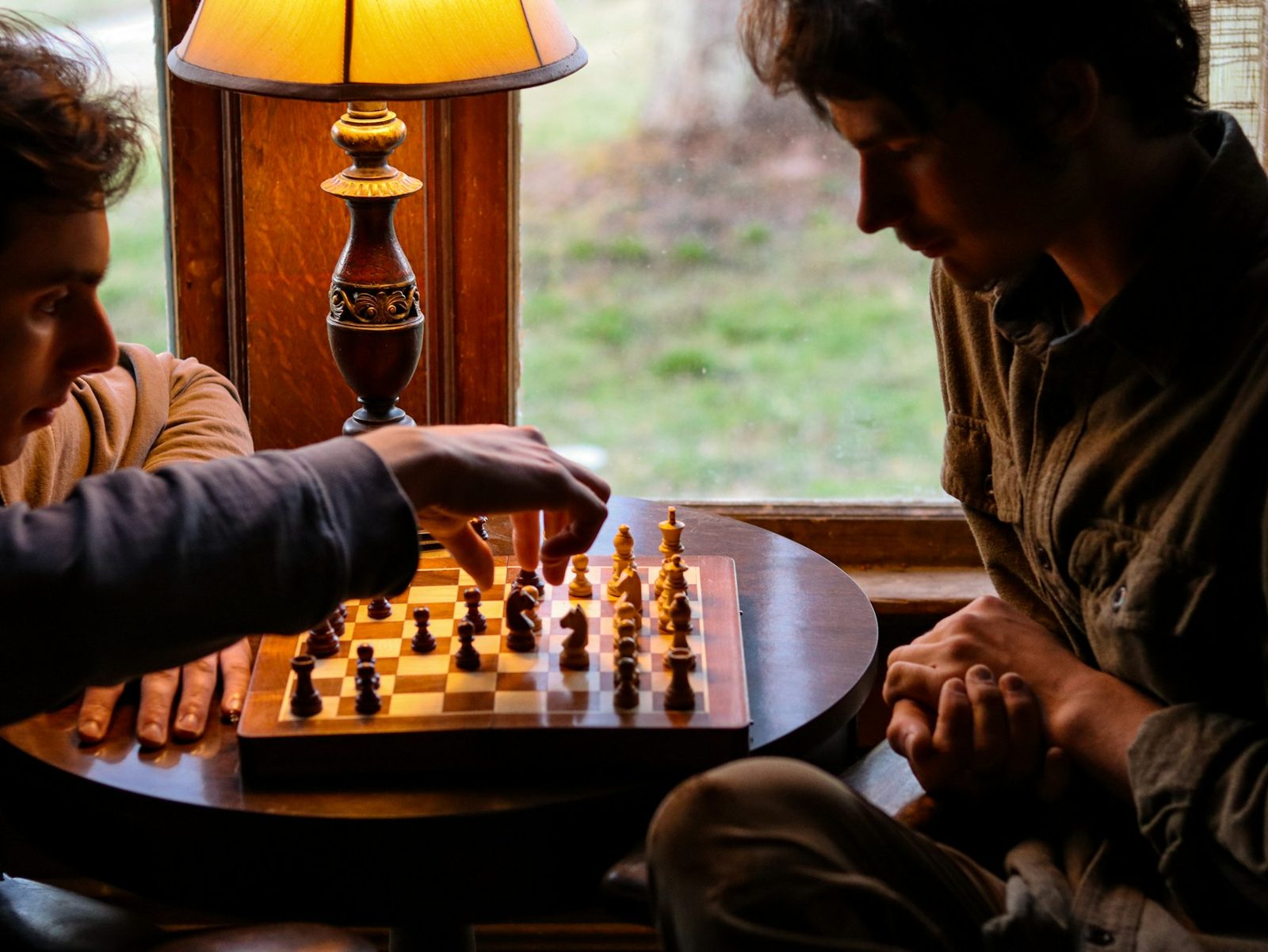
Activities are designed to appeal to large groups of people, improving networking and interaction. Teenagers, for instance, can take part in a team-building activity, or organize tournaments of helpful video games or chess, with the winners meeting in later stages for a community-wide competition. Partnered couples can use such opportunities for dinners, or invite experts to talk about how to strengthen their relationships.
The village council does not run these events. They are organized by the village’s gathering Business Enterprise, and they are paid for by those who take part.
District events
There are no Unit, Branch, class, or village meetings in the thirteenth week. In this week, each district holds various activities from Monday to Thursday. These events, held in the evening from 6:00 to 8:00, involve the whole district of 3,840 people.
District events are similar in theme to the village events of the previous twelve weeks, but they aim to use the larger numbers to strengthen bonds between participants and encourage greater participation.
While events during this week are not organized by class, classes can nonetheless use the week as the culmination of their previous weeks’ activities. Teenagers and young adults in all the Branches who are chess enthusiasts, for example, may have been playing each other in a league. In the thirteenth week they can hold the last stages of the competition, with sixteen finalists playing each other and the final taking place on Thursday night.
This may also be an opportunity for Branches, whose floor captains recruit with a keen eye on diversity, to hold a cultural event at which different cultures showcase their cuisine, dress, music, and dance, among the other things that define them.
The district council sets the calendar for these events and approves those that meet Bureau 6 standards. It does not run them and it spends nothing. The events themselves are organized by event Business Enterprises.
Community events and the quarterly conference
On the Friday and Saturday of the thirteenth week, there are community events designed for everyone in the community, facilitated by Bureau 6, Leisure. The events are an opportunity for participants from different districts to meet. They can include concerts, sports tournaments, and similar activities likely to attract a sizeable share of the community’s 92,160 residents.
The scope on Friday and Saturday is much larger. It can involve showcasing a product to a bigger market, performing in front of a bigger audience, or sampling what other people in the community have to offer. During these two days, farmers can come together for an agricultural fair at which they show their best produce, while app developers can take the opportunity to show new designs that help people manage their businesses and homes, have fun, or meet others more easily.
Event organizers work with Bureau 6, which sets the standards and the calendar. This ensures smooth, well-run events, and gives participants the best experience. Bureau 6 does not pay for any event.
The quarterly conference occupies the Saturday and Sunday of the thirteenth week. Saturday is the teaching day: every stand president with an office corps teaches it, before any report is given, and nothing decided in a teaching session binds anyone. Sunday is the reporting day: all 1,920 of the community’s presidents attend, with the courts of the two Segment-court buildings sitting as the four Segment courts. All twenty-four stand seats report, each held by a presidency of four mirrored across the four courts, so the day carries ninety-six reports, in eight forty-five-minute blocks of three seats from 9:00 in the morning to 8:45 in the evening, each block followed by a fifteen-minute break, with no reports during meals. Participants, including floor captains, can follow the conference online. Each president attends at his or her own cost, and no one is reimbursed.
How meetings and events are paid for
In NewVistas, the user who benefits pays. This applies to Unit and Branch functions, to village and district events, and to services from bureau-certified consultants. It is never the Unit, Branch, village, district, or bureau that pays.
No grouping in the community has a budget. A community holds title to everything, but it has no right to spend money, and neither do its bureaus or presidencies. Nobody is reimbursed either. A leader cannot spend money and claim it back later. These two rules matter equally.
The reason is simple. Once leaders are given a budget, they tend to want a larger one, and spending grows from year to year. Without budgets, every gathering must be worth paying for to the people who attend it.
One more rule follows from this. Participants commit first, and facilities are rented afterwards. No room, hall, or table is booked until those who will use it have signed up to pay for it. A Branch Presidency, for example, cannot hold a party unless its participants have first agreed to pay its costs.
Each kind of gathering is paid for as follows.
- Sunday Branch meetings and classes. Each village has a licensed gathering Business Enterprise, which books the rooms, sets them up, and coordinates the volunteer teachers. Every household’s Life Plan includes a small quarterly gathering subscription, which the household may decline. The subscriptions are signed in the quarter before, and only then are the rooms booked. Because almost every household subscribes, the meetings remain open to all, and every user still pays.
- Unit and Branch lunches. Each person pays for his or her own meal, charged to the household’s account at the dining room. If the dining room charges for a private area, that charge is shared among those who signed up. The tables are reserved only after the members have signed up.
- Village weekday events. These are covered by the gathering subscription, or paid for event by event by those who take part.
- District and community events. These are run by event Business Enterprises. They are paid for by tickets, by an optional week-13 pass in each household’s Life Plan, by stall and exhibitor fees from businesses that show their goods, and by sponsors. Each event has a minimum number of tickets or passes, and its organizer books the venue only once that minimum is reached. If the minimum is not reached, the event does not go ahead, and buyers are refunded. A refund returns a person’s own money, so it is not a reimbursement.
- Services from certified consultants. The household or business that uses a consultant pays the consultant directly.
- The quarterly conference and the Council of Fifty. Every president pays his or her own costs, including travel, food, lodging, and a share of the rooms. Nobody is reimbursed.
The quarter’s district and community events follow a simple timetable. The programme is published in week 6, and ticket and pass sales close in week 10. Events that have reached their minimum book their venues in week 11, and the events take place in week 13.
This arrangement keeps every gathering voluntary and self-funding. A gathering Business Enterprise earns its revenue only when people choose to come, so it has every reason to make its events worth attending. Presidents attend on the same terms as everyone else. Organizing or presiding at an event earns no free entry and no reimbursement. Because no grouping holds money, nothing is left over at the end of a quarter, and no one has to check how money was spent.