Chapter 6: The NewVistas Charter
Parts One through Five recovered the specification and put it into operation within a NewVistas governing framework of twenty-four bureaus. Part Six serves as the working reference for that framework: it states the single charter every bureau signs, defines the digital substrate that lets a fully digital community function without surveillance, and gives each bureau a clear account of what it governs and what it may not operate.
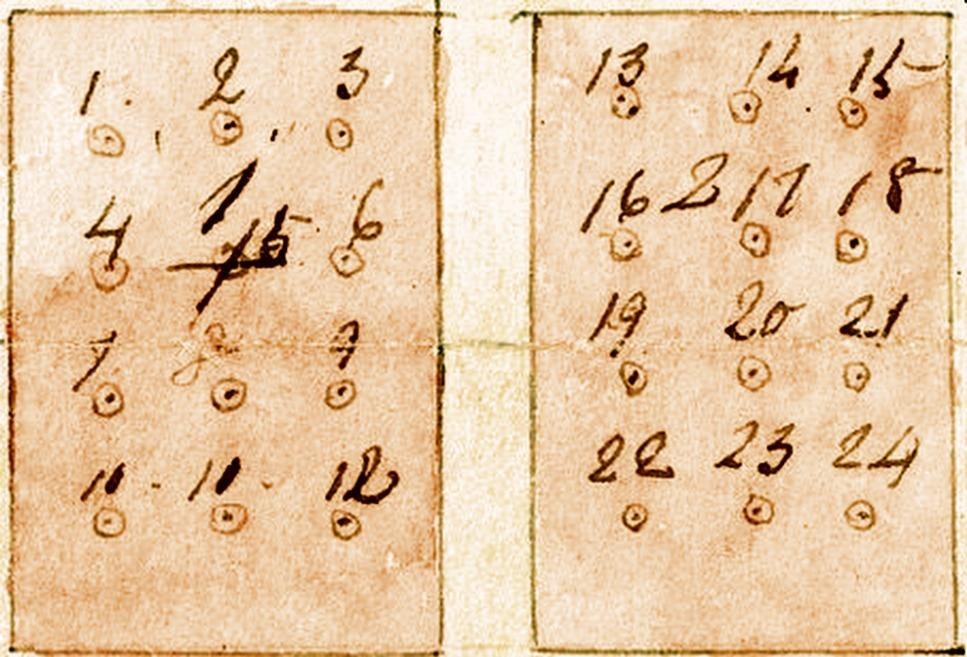
Bureaus Govern; Departments Do Not
One clarification governs everything that follows: bureaus govern; a department has no authority over the bureaus grouped within it. A department is only a coordinating body of three independent bureaus whose presidencies meet as a twelve-member bureau council to align standards and interfaces. Each of the twenty-four bureaus governs its own domain independently, and that independence preserves the separation of powers the system depends on.
The documentary basis is the eight names written on the reverse of the PLOT, which generate the eight departments and twenty-four bureaus. The office rule — “let every man stand in his own office, and labor in his own calling” — is what makes that separation enforceable across all twenty-four bureaus at once.
The Bureau’s Community Charter
The charter is the contract signed by all twenty-four bureaus. Its first rule is simple: a bureau governs, and only governs. It publishes standards, defines certification, governs admissibility, verifies proof, and issues the approval components assigned to it. A bureau may not deploy capital, hold a budget, accumulate reserves, run payroll, hire productive labor, take custody of assets, or operate a business — and the same restraint applies to every coordinating layer above it: presidencies, councils, captains, branches, villages, districts, and departments.
Bureau independence is part of the charter: each bureau governs its own domain and may not enter another’s. No capital-affecting action — lease, draw, lien, title transfer, or acquisition — may proceed unless it clears the origination gate by passing schema completeness, market verification, and underwriting viability together. Two prohibitions protect that gate:
- Circular-influence ban — bureaus that govern lease, custody, or operating standards may not influence origination decisions. A regulator cannot approve financing for its own domain.
- No-disguised-operation rule — no bureau may recreate a forbidden operating arm through retained staff, vendor dependency, a nominally independent entity, a software monopoly, or artificial intelligence. The charter governs substance, not labels.
Three final clauses complete the charter: no idle reserves (lifecycle-cost schedules and cost-priced service charges replace standing reserves); AI supports but never rules (it may check, flag, validate, translate, and simulate, but may not make rules, grant exceptions, determine truth, underwrite risk, or define the Owner’s Draw); and civil-law compliance without civil authority (the community is not a city, state, or sovereign jurisdiction — it operates through agreement, contract, lease, and certification under the law of the land).
The Digital Substrate: Proof Without Surveillance
Because this system runs on software, people may worry that it watches everyone all the time. It does not — the constitution separates proof from surveillance. The system keeps proof for important actions: transactions, approvals, payments, certifications, audit alerts, publications, course registrations, title actions. Bureau 11, Proof, manages the records that make this possible — IDs, logs, receipts, timelines, version history. In plain terms, it works like the system’s memory: approved actions cannot simply disappear, and steps outside the rules are flagged for review.
Privacy is protected at the same time. Personal data belongs to the individual, locked, separated by purpose, and used only through approved steps — the community may use broad statistics, but cannot look through one person’s private records. An Enterprise Owner only sees what is needed to do the job safely: they may see an allergy or a delivery time, but not someone’s full medical history. These limits are built into the system, not just written in policy — no single person, administrator, or bureau can see everything, because different kinds of data are kept in separate places by design.
| Bureau 11 — Proof | Handles proof itself |
| Bureau 16 — Accounting | Handles accounting truth |
| Bureau 18 — Metrics | Handles only broad statistics |
| Bureau 14 — Legal | Sets privacy rules |
| Bureau 15 — Audit | Reviews problems when flagged |
The Eight Departments and Twenty-Four Bureaus
The twenty-four bureaus are arranged into eight groups of three under the restored building names from the PLOT’s reverse side. Each department name is quoted exactly as recovered; each bureau entry states what it governs and, just as importantly, what it explicitly does not operate — the constitutional discipline that runs through every one of the twenty-four.
Department I — The Village
“The house of the Lord for the Elders of Zion, an ensign to the nations” — governs the custody rails: how productive assets are leased to participants and held in their care.
| Bureau | Governs | Does not operate |
|---|---|---|
| 1 — Inventory | Short-term productive assets: raw materials, supplies, work-in-process, consumables | Holds no title, keeps no custody, is not a supplier or warehouse operator |
| 2 — Facilities | Residential and commercial building standards, design, safety, maintenance | Not a landlord or developer — Bureau 8 holds title |
| 3 — Equipment | Equipment, fixtures, tools, furniture, machinery standards | Not a manufacturer or equipment lessor — Bureau 9 holds title |
Department II — The District
“The holy Evangelical house for the high priesthood of the holy order of God” — sets the standards for daily human life.
| Bureau | Governs | Does not operate |
|---|---|---|
| 4 — Food/Health | Health, nutrition, food civilization, provider certification, farms and greenhouses | Runs no clinic, farm, or restaurant; does not mandate menus or ban foods |
| 5 — Life Plan | Life Plans, Owner’s Draw eligibility, Learning Mentors | Holds and funds nothing; issues no credit; runs no schools |
| 6 — Leisure | Recreation, sport, the arts, hospitality, Social Houses, festivals | Runs no venue, club, studio, or resort |
Department III — Title
“The Sacred Apostolical repository for the use of the Bishops” — governs title and finance representation by asset class.
| Bureau | Governs | Does not operate |
|---|---|---|
| 7 — Clearing | Short-duration title for inventory-class assets; liens and settlements | Not a bank — holds no deposits, makes no loans |
| 8 — Property | Long-duration title for land, buildings, infrastructure; where the Deed enters the system | Does not develop, manage, or finance property directly |
| 9 — Capital | Equipment-class title, depreciation and lifecycle-cost schedules | Does not buy, own, or operate equipment |
Department IV — Platforms
“The house of the Lord for the presidency… after the order of Melchizedek” — governs the communications and proof substrate. The separation across three bureaus is deliberate: no single body controls the devices residents use, the proof those devices submit, and the media residents see.
| Bureau | Governs | Does not operate |
|---|---|---|
| 10 — Communications | Device standards, interoperability, emergency alerts, accessibility | Does not run the network or provide devices |
| 11 — Proof | Identity rails, logs, receipts, sequencing, proof objects — “the constitution’s memory” | Cannot act as policy-maker, underwriter, or surveillance system |
| 12 — Media | Broadcast, streaming, signage, public-interface neutrality | Operates no media company, publishes no content |
Department V — Regulatory
“House of the Lord for the Deacons in Zion, helps in government” — its recovered name alone among the eight speaks of government, yet each bureau governs standards only and operates nothing: no lab, no court, no inspectorate.
| Bureau | Governs | Does not operate |
|---|---|---|
| 13 — Innovation | Research standards, licensing, patents, trademarks, commercialization pathways | Runs no labs, holds no funds, collects no royalties |
| 14 — Legal | Legal templates, contract language, civil-law compliance, amendment validity | Not a court; resolves no disputes; no standing legal department |
| 15 — Audit | Trigger-bound compliance auditing and integrity verification | Not a roving inspector — acts only when a published trigger fires |
Department VI — Data
“House of the Lord for the teachers in Zion, messenger to the community” — governs how truth is recorded, published, and measured, while remaining barred from compiling personal dossiers.
| Bureau | Governs | Does not operate |
|---|---|---|
| 16 — Accounting | Ledger schema, reconciliation, Trust-ledger representation, residual recognition | Not a treasury or bank; does not set rent or define Owner’s Draw |
| 17 — Publication | Publishable knowledge, Practice Guide certification, the digital library — half of all coursework | Operates no school, employs no faculty, dictates no curriculum |
| 18 — Metrics | Measurement standards: demographics, footprint calibration, cost-of-living indices — aggregate only | Never drills into an individual’s records; never defines the Owner’s Draw |
Department VII — Origination
“House of the Lord… the law of the Kingdom of heaven… after the order of Aaron” — these three bureaus form the origination gate every capital-affecting action must clear, with passage requiring all three at once.
| Bureau | Governs | Does not operate |
|---|---|---|
| 19 — Schema (TOK-19) | Business Enterprise Plan completeness and structural coherence — tests completeness, not merit | May not decide desirability or choose winners |
| 20 — Markets (TOK-20) | Market verification: demand artifacts, off-take confirmation, comparable evidence | Guarantees no demand, assigns no customers |
| 21 — Underwriting (TOK-21) | Risk classification, stress tests, viability corridors — the final gate | Executes no financing, holds no title |
Department VIII — Infrastructure
“House of the Lord for the presidency of the high priesthood after the order of Aaron, a standard for the people” — governs the physical foundation beneath the whole system, much of it coordinated across the Council of 50.
| Bureau | Governs | Does not operate |
|---|---|---|
| 22 — Materials | Material continuity: recovery-first admissibility, precision extraction, passports | Operates no mine or refinery, holds no title |
| 23 — Utilities | Building-scale utility standards: reliability, CO2 routing, the ten-building utility-firm scale | Owns no plant, operates no utility, collects no operator fees |
| 24 — Transportation | Mobility standards, rights-of-way, interoperability, federated coordination | Owns no fleet, operates no shuttle, runs no airport |
Eight names, eight groupings, three independent bureaus in each: 8 × 3 = 24, the same number fixed by the HOUSE and PLOT documents, each building closing at eighty offices to seat the 1,920 presidents across four ABCD co-ordinate courts in buildings 5 and 17. The bureaus govern; the departments coordinate; the Enterprise Owners operate.
How People Come In: A NewVistas Growth Stages
The charter is not just a static reference — the source material traces how a single community actually grows into it, stage by stage, from one founder to full scale.
| Scale | Governance in place | How people come in |
|---|---|---|
| Founder + Council of 12 | Three presidencies of four seated by the founder; lots stagger the terms | Founder qualification by testing; no Enterprise Owners yet |
| 1 building, 96 people | Council of 12 governs approvals; Captains of 10 appear as floors fill | Renter-only — forty renters paying through an external bank account |
| 4 buildings, 384 people | 16 captains form four branch presidencies; one village presidency acting across all three roles | First enterprises: property manager, dining, kitchen, landscaping |
| 10 buildings, 1 village (960 people) | A full village; the three village-presidency roles begin to separate toward mature form | Service enterprises multiply; more subscriptions come inside |
| 40 buildings, 1 district (3,840 people) | First district public building stands; district-scale net worth supports community credit lines | Real transition to formal enterprise: competitive formation, lease custody, certified Business Enterprise Plans |
| 24 districts, 92,160 people | All eight departments and twenty-four bureaus stand up and operate as one constitutional organism | Full participant entry: conveyance of all property, Life Plan, business plan, enterprise leases |
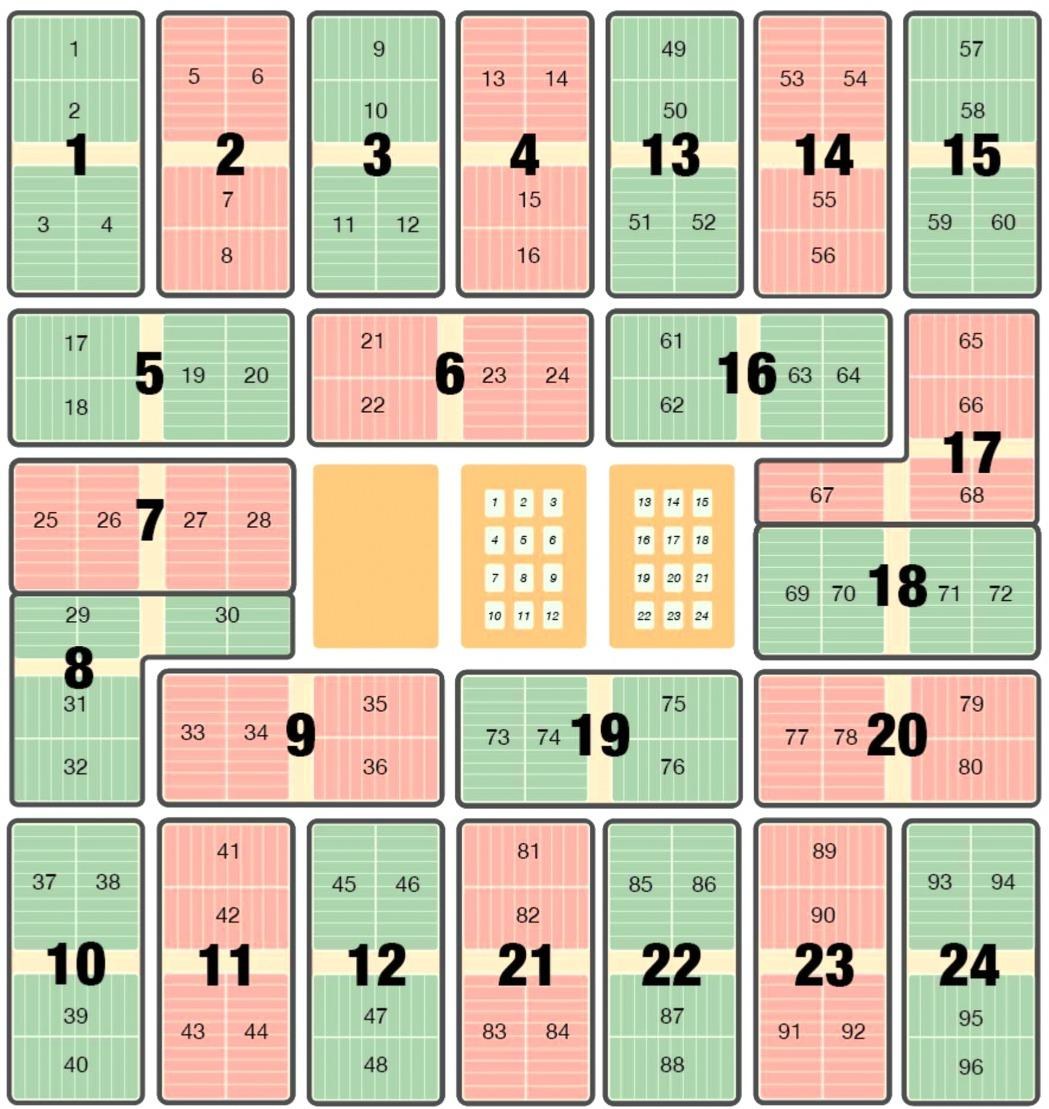
The reference above states what each recovered office governs — and refuses to operate — in practice. Eight departments, twenty-four bureaus, one growth path from a single founder to a community of ninety-two thousand: the charter that makes the recovered specification workable at scale.