Ecological Siting
Environment: The Thousand-Year Standard · Pillar 3 of 5
The landscape determines the farming type.
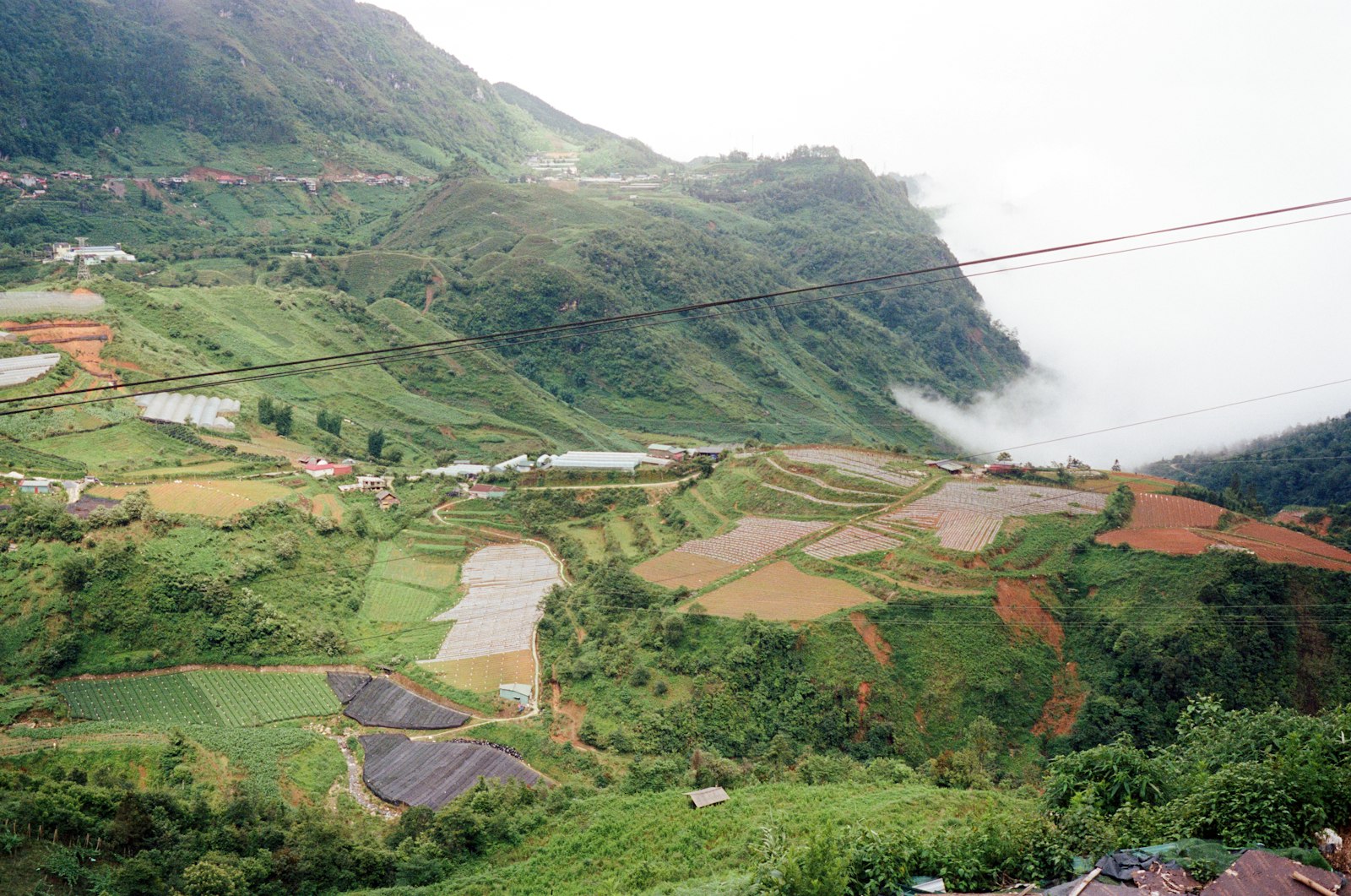
The governing principle of all hinterland agriculture is ecological siting: the landscape determines the farming type, not the other way around. Each system operates entirely within its natural ecological envelope.
NewVistas does not irrigate dry land to grow rice, does not pump aquifers to sustain grain through drought, and does not impose grazing on land that never evolved with large herbivores. Where the natural conditions for a crop do not exist, the land stays wilderness.
| System | Sited only where… | Because |
|---|---|---|
| Dry farms | Rainfall alone supports the crop | No aquifer pumping or canal irrigation — the rain that falls is the only input |
| Wet farms | Meadows on their own ground water; paddy and lowland rice in the wet tropics | Deltas, monsoon floodplains, wet lowlands — working with the hydrology, not against it |
| Herd grazing | Grassland co-evolved with herbivores | Hoof action, manure, and rotational rest restore the land the great herds once kept |
| Silvopasture | Land carries trees with grass | Trees, forage and animals as one system, on the hinterland only, never on the community’s farm blocks |
| The communities’ prime farmland | Water, soil and season for full yield | Vegetables, fruit and greens, never grain |
II · Working within the envelope
Restoration, not imposition
Placed correctly, each system does ecological work as it produces. Dry farming builds soil carbon through proper rotation; wet farming manages flood timing within an existing cycle; and grazing, sited in grassland that co-evolved with megafauna, restores a broken biological loop — hoof action breaks soil crust, manure returns nutrients, and rotational management gives land rest between passes. Grazing siting is therefore ecological before it is economic.
The result is verified by what the land actually does. Bureau 4 governs agricultural-suitability, aquifer-protection, and ecological-placement standards, and Bureau 18 measures soil, water infiltration, and biodiversity outcomes over time — so siting is judged by results, not claims. Where water is added at all, it is renewable running water that leaves its river its free flow, spring surges put down to recharge the aquifers, or an aquifer that is not depleted; the irrigation rights of today’s hay and grain land are bought for the communities’ permaculture. Farming the Hinterland sets out the dry and wet farms and the herd method.
III · In short
Summary
Ecological Siting lets the landscape choose the farming: dry farms only where rainfall suffices, wet farms only where water is naturally abundant, grazing only in grasslands that evolved with large herds — each within its natural envelope. Correctly placed, every system restores as it produces, and Bureau 18 verifies the outcome in soil, water, and biodiversity. That living diversity is not a constraint but an asset — biodiversity as capital.
Environment: The Thousand-Year Standard — Food, Land & Restoration · The Thousand-Year Standard · Ecological Siting · Biodiversity as Capital · Footprint Accounting.